
 Login
Login 

Assets
Asset tracking for field teams — why your workforce app should include it
By Humanz · 2026-06-08
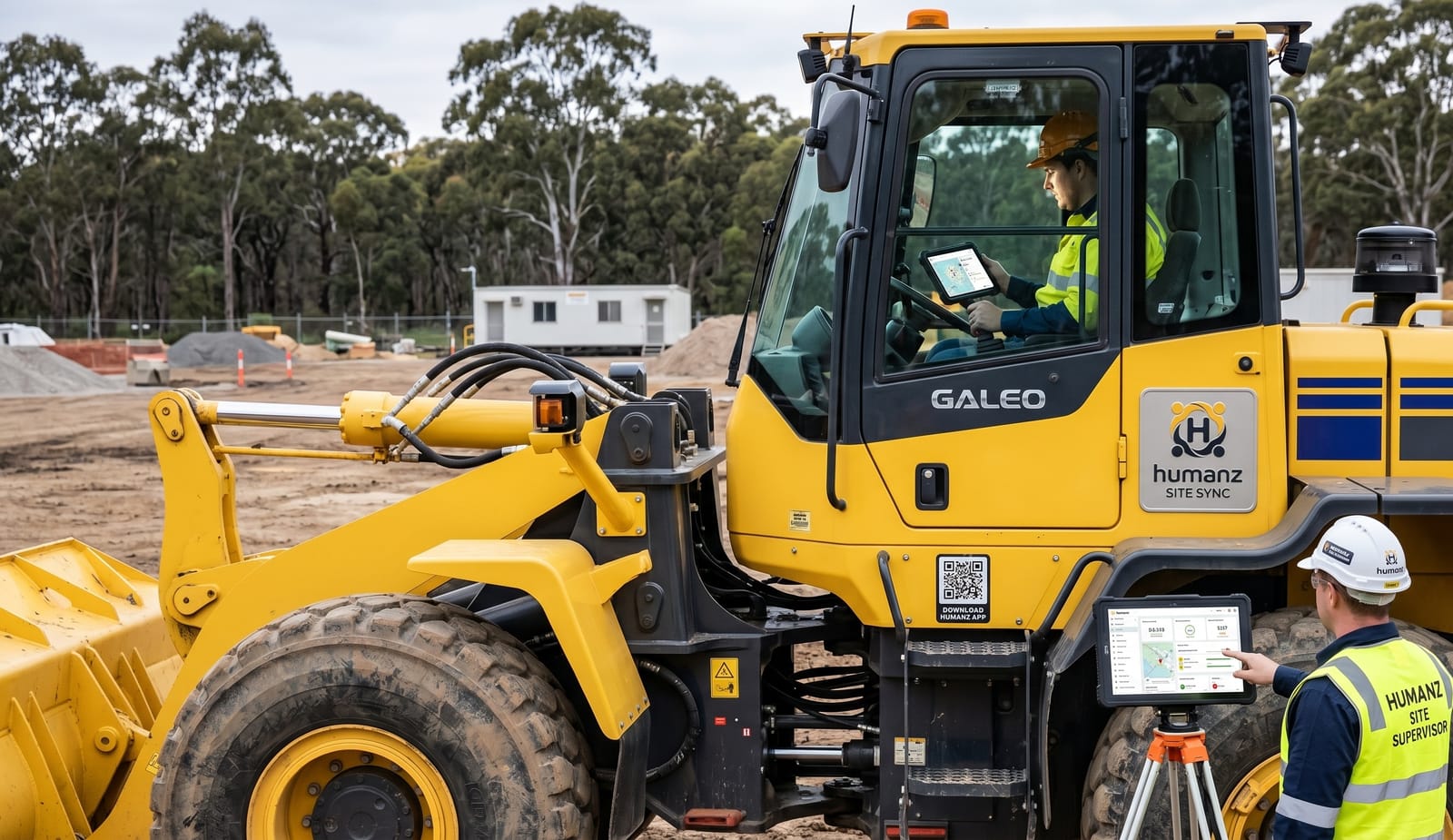
Ask any site manager what their biggest frustrations are, and lost or unaccounted-for tools and plant will be somewhere near the top of the list. A missing generator or a drill left on a previous job isn’t just an annoyance — it’s a direct cost to the business, a potential safety issue, and a delay to the current job.
For Australian trades and construction businesses managing equipment across multiple sites, manual asset tracking — spreadsheets, handwritten logs, or simply relying on workers to self-report — isn’t cutting it.
This article explains why asset tracking matters, what it should look like in practice, and why it belongs inside your workforce app rather than as a bolted-on afterthought.
The real cost of untracked equipment
Lost, stolen, or misplaced tools and plant are a significant cost centre for construction and trades businesses. Some common scenarios:
- Tools left on a completed job site and not recovered until a week later (if at all)
- Plant allocated verbally to a worker who then leaves the business — and the equipment goes with them
- No record of which site has which equipment, leading to double-purchasing
- Servicing schedules missed because there’s no system tracking service dates
- Equipment on-hired to another business with no formal record — and no return date
The financial impact adds up quickly. A business running 20 or more field workers across multiple sites can easily lose tens of thousands of dollars a year in untracked equipment.
Beyond the direct cost, there are WHS implications. Plant and equipment that isn’t properly tracked and serviced can become a safety risk — and Safe Work Australia places a clear duty on businesses to maintain plant in a safe condition. For a broader look at what site compliance covers, see our construction site compliance checklist.
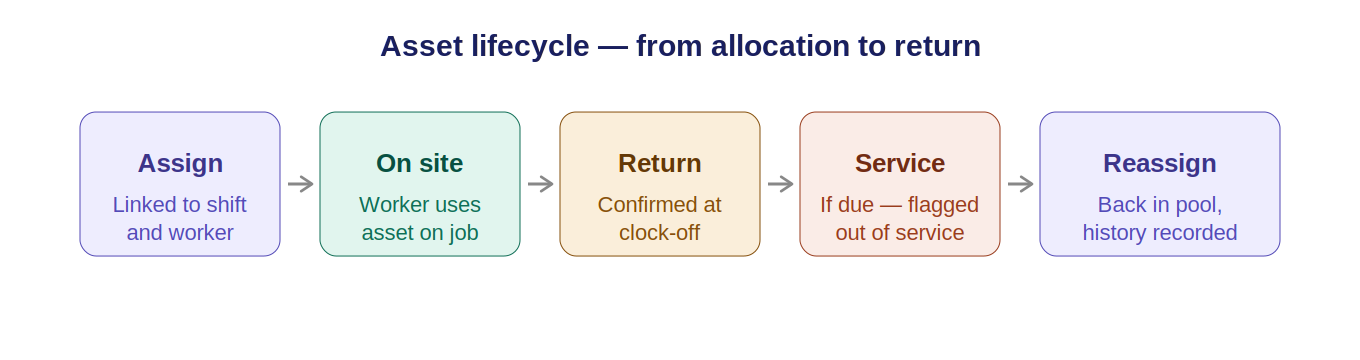
What asset tracking actually looks like in a field workforce context
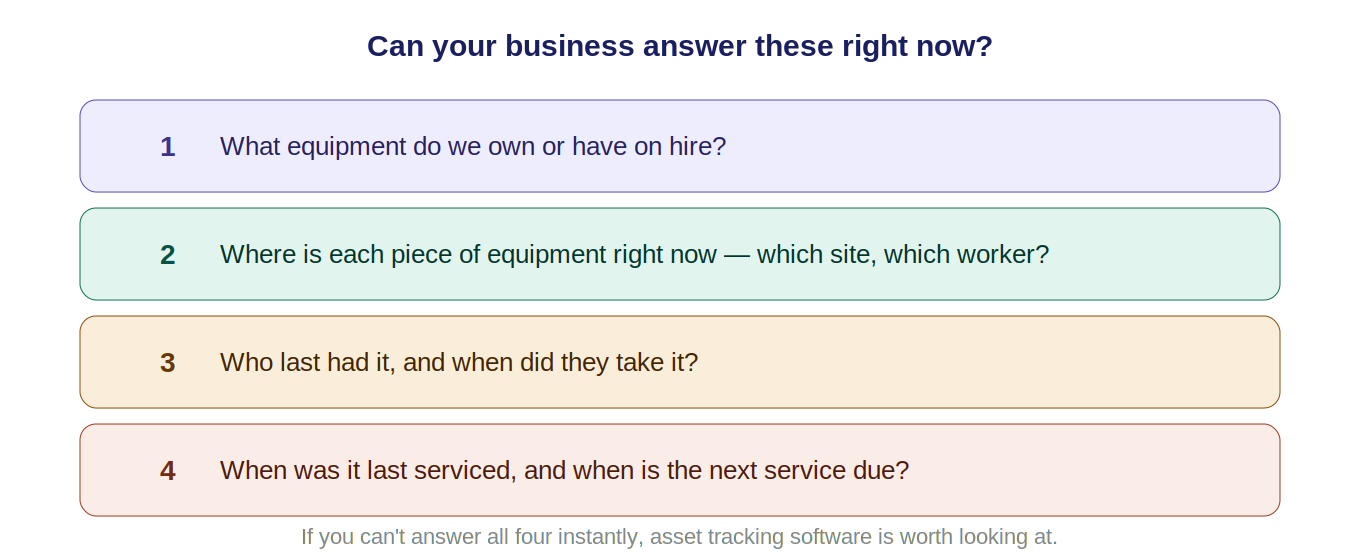
Asset tracking for field teams isn’t about installing GPS trackers on every tool. For most construction and trades businesses, it’s about knowing:
- What equipment is owned or on-hire — a single, accurate register of all assets
- Where each asset is right now — which site, which worker, which project
- Service and maintenance history — when was it last serviced, when is it next due
- Who has it and when they took it — an auditable allocation record
- When it’s due back — and whether it’s been returned
This information doesn’t need exotic hardware. It needs a simple allocation system that’s tied to your roster and workforce management — so when a worker is assigned to a shift, the assets allocated to that shift go with them, and there’s a record of it.
Why asset tracking belongs in your workforce app
Many businesses approach asset tracking as a standalone problem and reach for a separate tool — a dedicated asset management system, a spreadsheet, or even a whiteboard.
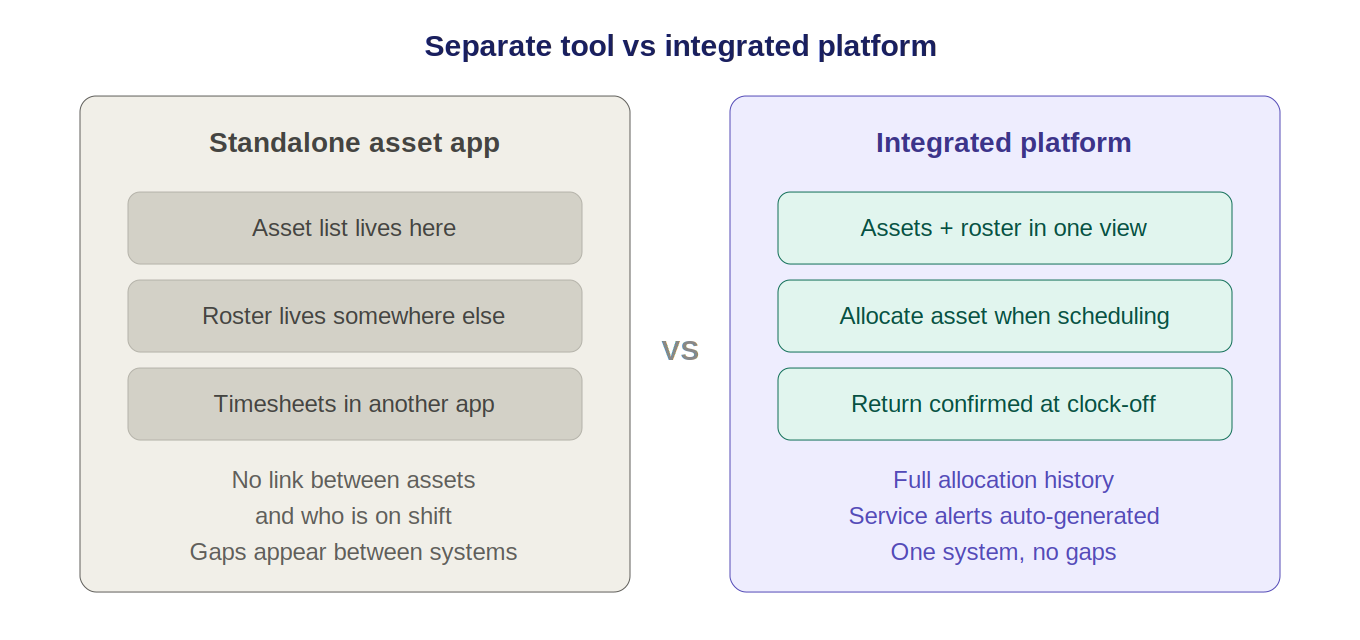
The problem is that assets don’t exist in isolation. They’re used by workers, on specific jobs, on specific shifts. When your asset tracking lives separately from your rostering and workforce management, you lose the connection between the two — and that’s where the gaps appear.
When asset tracking is built into your workforce app:
- Assets are allocated per shift — when you schedule a worker for a job, you allocate the plant and equipment they need at the same time, in the same system
- Supervisors see asset allocation alongside their roster — one view, not two separate apps
- Returning assets is part of the shift completion workflow — workers confirm returns as part of clocking off
- Service dates and compliance sit next to WHS records — everything is connected
This integration is what separates purpose-built field workforce platforms from generic asset management tools. It also ties directly into in-app messaging for field teams — when a worker needs to flag a damaged or missing asset, a job-linked message beats a phone call every time.
Key features to look for in asset tracking software for trades
- Asset register: A searchable, maintainable list of all equipment — owned, leased, or on-hire — with make, model, serial number, and purchase or hire date
- Allocation per shift or job: Assign specific assets to specific workers or shifts, with a timestamp record of the allocation
- Service and inspection scheduling: Set service intervals per asset, with alerts when service is due. Flag assets as out-of-service when maintenance is underway
- Audit trail: Full history of where each asset has been, who had it, and when it was returned
- Mobile access: Field supervisors and workers should be able to view and update asset status from their phone — not just from a desktop
- Integration with rostering: Asset allocation should sit alongside shift scheduling, not in a separate system
The HIA (Housing Industry Association) and Master Builders Australia both highlight plant and equipment management as a key operational area for construction businesses — it’s not a back-office concern, it’s a frontline one.
How Humanz handles asset tracking for field teams
Humanz is a mobile workforce app for contractors and construction teams that includes asset tracking as part of the core workforce management platform — not as a bolt-on. Assets are visible alongside your roster, so allocation is part of the scheduling workflow rather than a separate task.
Key asset features in Humanz:
- Asset register — add and manage all plant and equipment in one place
- Allocation per shift — assign assets to specific workers and shifts when building the roster
- Service date reminders — set maintenance intervals and receive alerts when service is due
- Allocation history — full audit trail of who had what asset, on which job, and when
- Out-of-service flagging — remove assets from allocation when they’re under service or inspection
- Mobile visibility — supervisors can view and manage asset allocation from the field
For businesses that have been tracking equipment via text messages and memory, the shift to a system like Humanz typically recovers equipment that was previously considered lost — and prevents the same situation repeating.
Asset tracking in Humanz sits alongside compliance tracking — so service records and WHS obligations for plant are managed in the same platform as your inductions and certifications. See the full picture in our construction site compliance checklist.
Frequently asked questions
Do I need special hardware for asset tracking?
Not for most construction and trades use cases. Software-based asset tracking — where allocation and returns are logged in an app — covers the majority of what field businesses need. Hardware GPS trackers are useful for high-value mobile plant (excavators, trucks) but aren’t required for general tool tracking.
What’s the difference between asset tracking and fleet tracking?
Fleet tracking typically refers to GPS-based tracking of vehicles. Asset tracking in a workforce context is broader — it covers all tools, plant, and equipment used by field workers, and is focused on allocation, availability, and service schedules rather than live GPS positioning.
How does asset tracking help with WHS compliance?
Safe Work Australia requires that plant and equipment is maintained in a safe condition. Asset tracking software with service scheduling ensures maintenance isn’t missed and creates a documented record that the business fulfilled its duty. This is particularly important for powered plant and lifting equipment.
Can workers see what assets are allocated to their shift?
Yes, in platforms like Humanz. Workers can see their allocated equipment as part of their shift details — reducing the chance of arriving on site without the right tools, or leaving equipment behind at the end of a job.
What if an asset doesn’t come back at the end of a shift?
A system with allocation records makes it immediately clear who had the asset, when they had it, and on which site. That information dramatically speeds up recovery and creates an accountable record if the asset is ultimately written off.
Ready to see Humanz on your own roster?
Free 30-minute walkthrough — we'll use your real crews, sites and shift patterns.