
 Login
Login 

Guides
Workforce management software for construction — what to look for in 2026
By Humanz · 2026-06-20

Managing a construction workforce isn’t like managing a retail team or an office. The workers are mobile, the sites change, the crews are a mix of direct employees and subcontractors, and the compliance obligations are among the most demanding of any industry in Australia.
Generic HR software — built for desk-based teams with predictable schedules and a single location — tends to fall apart when you put it in front of a construction business. The features that matter most aren’t there, and the features that are there aren’t relevant.
This guide covers what makes construction workforce management uniquely difficult, what software needs to do to handle it properly, and what to look for when evaluating your options in 2026.
Why construction workforce management is uniquely complex
Multi-site crews and shift patterns
A construction business might have crews across five active sites simultaneously, each with different start times, shift lengths, and trade requirements. Workers move between sites. Shift patterns change week to week based on project progress. Subcontractors are booked for specific scopes, not ongoing rosters.
A scheduling tool that works for a single-site retail business with fixed shifts doesn’t handle this well. Construction rostering needs to support multi-site visibility, flexible shift patterns, and the ability to move workers between jobs in real time.
Master Builders Australia consistently identifies workforce scheduling as one of the most significant operational challenges facing builders and contractors — particularly for businesses managing multiple concurrent projects.
Subcontractors vs direct employees
Most construction businesses run a mix of directly employed workers and subcontractors. These two groups have different compliance requirements, different timesheet arrangements, different onboarding processes, and different rates. A system that treats everyone the same creates compliance gaps — particularly around licence tracking, insurance verification, and Fair Work classification.
For a full breakdown of what subcontractor management looks like in a construction context, see our guide on subcontractor management software Australia.
Compliance and certification requirements
Every person on an Australian construction site needs a White Card. Many roles require additional licences — crane operators, scaffolders, riggers, asbestos removalists, and others. These licences expire. Workers move between states where different licences apply. Principal contractors increasingly require documented evidence of compliance before allowing workers on site.
The Australian Building Codes Board sets national standards that underpin licensing requirements across the industry. State and territory regulators — including WorkSafe WA — enforce these at a jurisdictional level, and requirements can vary significantly between states.
A workforce management platform for construction needs to track credentials per worker, alert you before anything lapses, and prevent uncompliant workers from being rostered. See our construction site compliance checklist for the full picture of what needs to be tracked.
Must-have features for construction workforce software
Mobile-first design for field workers
Construction workers aren’t at a desk. They need to access their roster, submit timesheets, complete forms, and communicate with supervisors from their phone — often in areas with poor connectivity. A system that requires desktop access, or that has a clunky mobile experience, won’t get used.
Offline capability is equally important. Workers on remote sites, in underground structures, or in large metal-frame buildings will lose signal. The app must keep working and sync when connectivity returns.
The Housing Industry Association (HIA) has noted the rapid shift toward mobile-first tools in residential construction — businesses that adopt them report significant reductions in admin time and compliance errors compared to paper-based processes.
Fatigue and safety monitoring
Construction is a high-risk industry, and fatigue is a significant contributor to serious incidents. For businesses running extended shifts, overnight work, or FIFO rosters, automated fatigue monitoring is no longer optional.
Safe Work Australia’s fatigue guidance identifies construction as a sector with elevated fatigue risk — particularly for workers on early starts, long shifts, and back-to-back rosters. The system should track cumulative hours across shifts, alert when a worker is approaching unsafe thresholds, and prevent the rostering of workers who haven’t had adequate rest. Our detailed guide on fatigue management software Australia covers what a proper fatigue risk management system should do.
Digital forms and site documentation
Pre-start checks, SWMS, site inductions, incident reports, toolbox talk records — construction generates a substantial volume of site documentation. Paper-based systems create filing headaches, make records difficult to retrieve, and provide no guarantee that forms were actually completed.
Comcare’s guidance on workplace documentation makes clear that documented evidence of safety processes is a core obligation — not an optional administrative exercise. Digital forms completed on mobile, with timestamps and geotags, create the audit-ready records that principal contractors and WHS regulators increasingly expect.
Asset and equipment tracking
Construction sites have significant plant and equipment that needs to be allocated, tracked, serviced, and returned. A workforce platform that includes asset management means you can allocate tools and plant at the same time you’re scheduling workers — no separate system required.
For more on how this works in practice, see our article on asset tracking for field teams.
Payroll and timesheet integration
Construction workers are often paid under complex Modern Awards with overtime rates, allowances, and penalty provisions. The Fair Work Commission publishes the applicable awards — the Building and Construction General On-site Award and the Construction, Forestry, Mining and Energy Award are the most commonly applicable for construction businesses.
Timesheet data needs to flow accurately into payroll without manual re-entry. The system should support pre-filled timesheets from roster data, a supervisor approval step, and export in a format your payroll system can consume. The ATO’s Single Touch Payroll requirements mean accurate timesheet records are also a tax compliance matter, not just an operational one.
Key questions to ask when evaluating platforms
Before committing to a workforce management platform for your construction business, these are the questions that matter most:
- Does it work offline? If your workers lose signal on remote sites, does the app keep functioning and sync when connectivity returns?
- Can it track subcontractor credentials separately from employees? ABN, trade licences, and public liability insurance all need separate fields and expiry alerts.
- Does it include fatigue monitoring, or is that a separate tool? If it’s separate, what’s the integration story?
- Can workers complete induction forms and pre-start checks on mobile before arriving on site?
- How does timesheet data flow into payroll? Is it a manual export, or a live integration?
- Is the vendor Australian-based? Support hours, understanding of Modern Awards, and familiarity with Australian WHS legislation all improve when the vendor operates in the same regulatory environment.
- What does implementation look like? How long, what resources are required, and what happens when you need to add a new site or project?
The Australian Institute of Project Management (AIPM) highlights systems integration as a key risk factor in construction project delivery — choosing a platform that requires significant manual bridging between tools creates exactly this kind of risk.
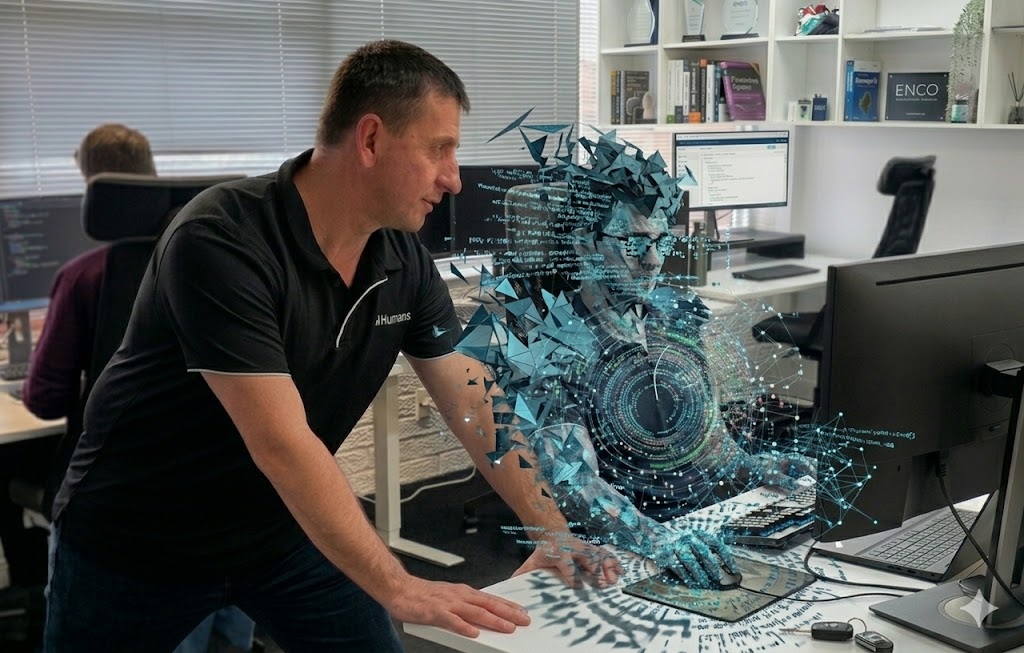
Why Humanz was built for construction
Humanz is a construction rostering app and workforce management platform built by Australians, for Australian field and construction teams. Unlike platforms that started in hospitality or retail and expanded into construction, Humanz was designed from the ground up for the specific challenges of field-based, multi-site, contractor-heavy operations.
Key capabilities for construction businesses:
- Multi-site rostering — schedule crews across multiple projects simultaneously, with a live view of who is where
- Fatigue monitoring — automated alerts based on cumulative hours, integrated with the roster
- Subcontractor management — dedicated contractor profiles with licence, insurance, and ABN tracking
- Digital forms — create and deploy pre-start checks, inductions, and incident reports on mobile
- Asset tracking — allocate and track plant and equipment per shift, with service scheduling
- Timesheet integration — pre-filled from roster data, approved by supervisors, ready for payroll export
- In-app messaging — job-linked communications with read receipts and retained history
For businesses currently managing construction crews across spreadsheets, WhatsApp, and multiple disconnected tools, consolidating into a single platform like Humanz typically reduces admin hours significantly — while improving the compliance posture across the business.
Humanz is also available as a mobile workforce app for contractors — subcontractors and labour hire workers access the same platform as your direct workforce, without needing a separate system.
Frequently asked questions
What is the difference between workforce management software and HR software?
HR software typically focuses on employment lifecycle management — contracts, leave, performance, payroll. Workforce management software focuses on operational scheduling — rostering, timesheets, compliance, and real-time visibility of who is working where. For construction businesses, workforce management is usually the more pressing need. Many platforms now offer elements of both. The same operational priorities apply across other shift-heavy sectors — see our companion guide on workforce management software for manufacturing for how these requirements play out on the factory floor.
Do I need different software for subcontractors and employees?
No — and you shouldn’t. A construction workforce platform that handles both worker types in the same system gives you a complete picture of your labour across every job. Separate systems create version control problems and compliance gaps. The key requirement is that the platform supports different profile fields and compliance requirements for each worker type.
How important is mobile access for construction workforce software?
It’s non-negotiable. Construction workers are not at desks. Any platform that requires desktop access for core functions — timesheet submission, roster viewing, form completion — won’t be adopted by field workers. The mobile experience needs to be as capable as the desktop, and it needs to work offline.
What Australian compliance requirements should the software support?
At minimum: Fair Work Act record-keeping (7-year timesheet retention), WHS Act requirements (induction records, incident reporting, fatigue management), and licence tracking for all workers and subcontractors. For businesses operating under specific Modern Awards, penalty rate and overtime calculations are also important. The Fair Work Ombudsman and Safe Work Australia both publish detailed guidance on what employers are required to maintain.
How long does implementation typically take?
For a small-to-medium construction business (20–100 workers), implementation of a platform like Humanz typically takes days to a few weeks, depending on the complexity of your roster setup and how much historical data you want to migrate. Most businesses are up and running with active rosters within a week.
Related articles
Ready to see Humanz on your own roster?
Free 30-minute walkthrough — we'll use your real crews, sites and shift patterns.