
 Login
Login 

Rostering
AI Rostering and Scheduling Software: How AI Is Changing Workforce Scheduling in Australia
By Humanz · 2026-06-26
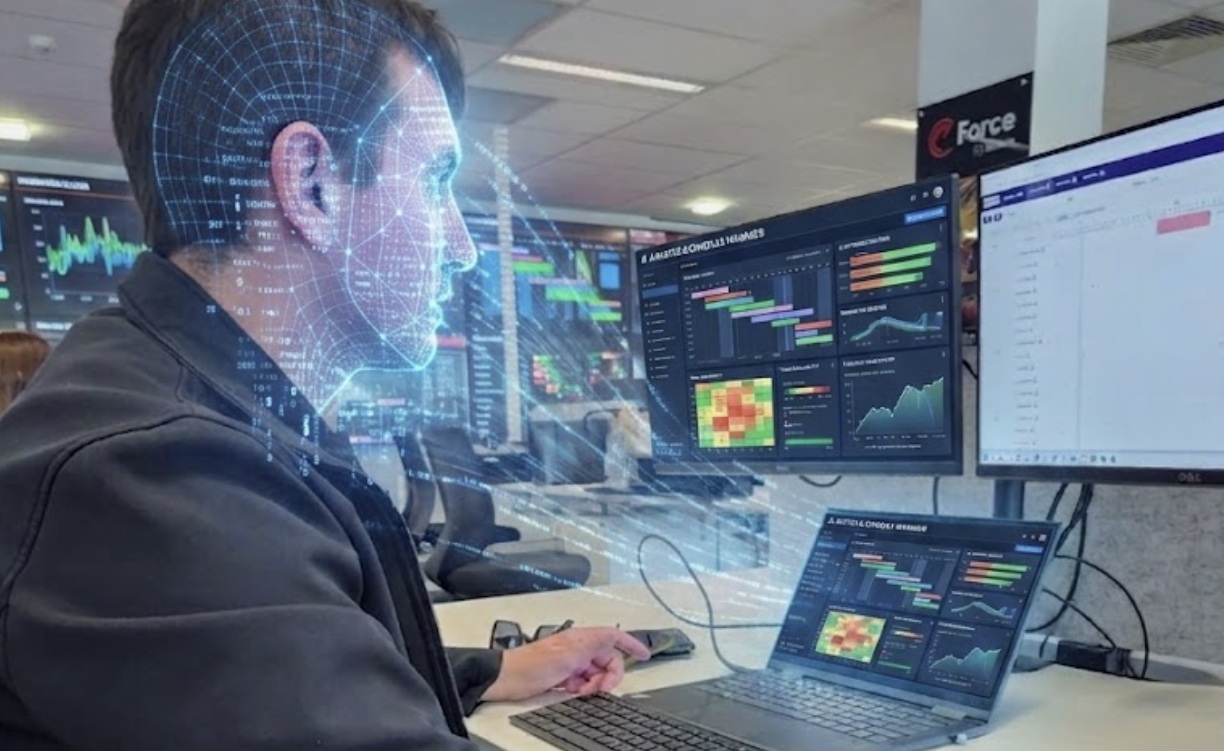
“AI scheduling” is one of the fastest-growing search terms in workforce management — and for good reason. Building a compliant, cost-effective roster across multiple sites, mixed crews, and shifting availability is exactly the kind of complex, repetitive optimisation problem that artificial intelligence is well suited to. But the term is also doing a lot of heavy lifting in marketing material, and not every “AI rostering” claim holds up.
This guide explains what AI online rostering and scheduling software actually does, where intelligent automation genuinely helps Australian field, trades, construction and mining teams, where human judgement still matters, and how to evaluate the difference between real capability and buzzwords.
What “AI rostering and scheduling” actually means
At its simplest, AI-powered scheduling uses algorithms — often a mix of optimisation, machine learning, and rules engines — to do work a coordinator would otherwise do by hand. Instead of dragging every shift into place and mentally cross-checking availability, qualifications and fatigue, the system proposes a roster and flags the problems.
In practice, “AI scheduling software” usually covers some combination of:
- Automated roster generation — the system builds a draft roster from your demand, available workers, and constraints, rather than starting from a blank grid
- Optimisation — balancing coverage, cost, overtime, travel and fairness across the whole schedule at once, not shift by shift
- Predictive insights — using historical patterns to forecast demand, flag likely no-shows, or anticipate where you’ll be short-staffed
- Conflict and compliance detection — automatically catching double-bookings, fatigue breaches, expired licences and award issues before a roster is published
- Natural-language and assistive tools — letting you ask for changes in plain language (“swap Jordan onto night shift Thursday”) and having the system handle the ripple effects
The important distinction: some of these are genuinely “AI”, and some are good automation dressed in an AI label. Much of what’s marketed as AI scheduling is really rules-based automatic scheduling and auto-rostering — a deterministic engine applying your constraints to build a draft, which is often exactly what a field business needs and is more predictable than a machine-learning model. For a field business, the label matters far less than whether the tool removes real work and prevents real mistakes.
Where AI genuinely helps in online rostering
Generating a compliant first draft in seconds
The biggest time saving is the blank-page problem. A coordinator managing 80 workers across four sites can lose hours assembling a baseline roster before any of the interesting decisions get made. AI roster generation produces a sensible first draft — coverage met, qualified people matched to jobs, obvious conflicts avoided — that a human then reviews and adjusts.
This is augmentation, not replacement. The coordinator’s experience is still what turns a technically valid roster into the right roster. But starting from 80% done instead of zero is a meaningful change to the working day. The foundation for this is solid real-time rostering software — AI is only as good as the live availability, qualification and compliance data it draws on.
Predicting and preventing no-shows
No-shows are expensive and largely predictable. Patterns in historical attendance — certain shifts, certain notice periods, certain times of year — are exactly what machine learning is good at surfacing. AI scheduling tools can flag a roster slot as high-risk before the day arrives, so a coordinator can confirm early or line up a backup.
This pairs naturally with shift confirmation and seen/unseen tracking: prediction tells you where to look, and confirmation tracking tells you whether the risk has actually been closed out. The operational cost of no-shows and how better rostering prevents them is where this kind of early warning pays for itself fastest.
Optimising for cost, coverage and fairness at once
Humans schedule one decision at a time. Optimisation algorithms can weigh the whole roster simultaneously — minimising overtime, spreading shifts fairly, reducing travel between sites, and keeping coverage intact, all together. For businesses running workforce analytics across field operations, this is the operational layer that turns roster data into lower labour cost without cutting corners on coverage.
Catching compliance issues automatically
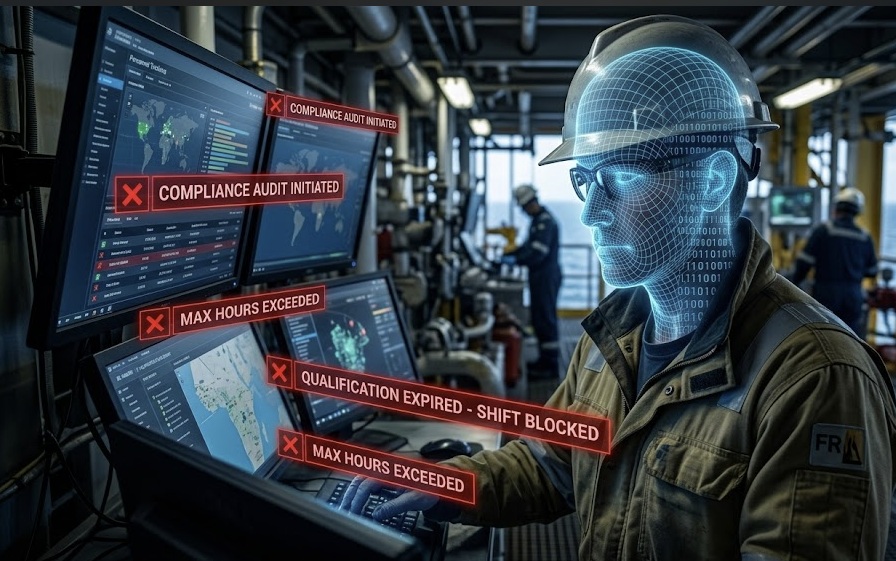
This is where AI-assisted scheduling and Australian regulation intersect — and it’s the most valuable application for field industries. A schedule that looks efficient but breaches fatigue limits or rosters someone with an expired ticket isn’t a good schedule; it’s a liability.
AI scheduling has to respect Australian compliance
Any AI rostering tool used in Australia has to work within a strict compliance framework. Optimising purely for cost or coverage while ignoring these obligations is not just risky — it can be unlawful.
Fair Work and award conditions
Modern awards set minimum rest periods, maximum ordinary hours, overtime and penalty rates. The Fair Work Commission’s award finder is the reference for which award applies, and the Fair Work Ombudsman’s pay calculator helps check specific scenarios. An AI scheduler that produces award-breaching rosters has optimised for the wrong thing. Fair Work compliance for shift workers covers the obligations that any automated roster must respect.
WHS fatigue obligations
Under model WHS laws, employers must manage foreseeable fatigue risk. Safe Work Australia’s fatigue management guidance requires fatigue to be identified, assessed and controlled — which means an AI roster must treat fatigue thresholds as hard constraints, not preferences. The strongest tools embed fatigue management and automated qualification and expiry alerts directly into the scheduling step, so a non-compliant roster can’t be confirmed in the first place.
Transparency and human oversight
Australia’s AI Ethics Principles emphasise transparency, accountability and human oversight — directly relevant to scheduling decisions that affect people’s pay and rosters. A good AI scheduler shows its reasoning (“this worker was chosen because…”) and keeps a human in control, rather than acting as an opaque black box. Workers should be able to understand why they were rostered the way they were.
The risks of getting AI scheduling wrong
AI is a powerful assistant, not an autopilot — and rushing it into a rostering system creates real risks. Implemented badly, AI scheduling can do more damage than the manual process it replaces, because its mistakes happen at scale and with a veneer of authority. The risks worth taking seriously:
- Compliance errors at scale. A manual slip affects one roster; a flawed model can systematically breach fatigue limits or award conditions across an entire workforce before anyone notices. Compliance logic has to be deterministic rules, not probabilistic guesses — a model that’s “95% accurate” on fatigue is a 5% liability.
- Bias and unfairness. Models trained on historical data can quietly entrench unfair patterns — the same people always getting the worst shifts, or some workers consistently favoured over others. Without deliberate checks, “optimised” can quietly mean “unfair”.
- Black-box decisions. If a system can’t explain why it rostered someone a certain way, workers won’t trust it and you can’t defend the decision if it’s challenged. Transparency isn’t a nice-to-have.
- Over-automation. Handing the final call entirely to an algorithm is a mistake. The hardest scheduling decisions — crew dynamics, client relationships, one-off site needs — are exactly the ones a model can’t see. Rostering direct employees and subcontractors in one view, each with different compliance profiles, only adds to that complexity.
- Data quality and privacy. Predictions are only as good as the data behind them — garbage in, confident-looking garbage out. And workforce data is sensitive; it has to be governed and secured properly.
- Eroding trust. Get it wrong early and people stop trusting the tool altogether — at which point even good automation gets ignored or worked around.
This is exactly why AI scheduling has to be implemented properly, not quickly: deterministic compliance rules first, then bias testing, full transparency, strong data governance, and a human in control of every final decision. The right model is “AI proposes, human approves” — automation does the heavy lifting, and an experienced coordinator makes the call. Australia’s AI Ethics Principles set out precisely this expectation of transparency, accountability and human oversight.
Where Humanz stands on AI scheduling
To be clear: Humanz does not have AI features in the application today. We’ve taken the deliberate view that AI scheduling is only worth shipping when it can be done properly — and that starts with getting the foundations right rather than bolting on a buzzword.
Humanz is an Australian-built workforce management platform with rostering at its core, built on exactly the groundwork that responsible AI scheduling depends on: clean, live data and compliance enforced at the point of scheduling.
- Real-time, multi-site rostering — all sites, crews and shifts in one live view, the data layer any smart automation depends on
- Live availability and qualification matching — see who is available, qualified and compliant before a booking is made
- Compliance gates embedded in scheduling — fatigue monitoring built into rostering, licence currency and qualification checks block non-compliant shifts before they’re confirmed
- Shift confirmation tracking — seen/unseen status on every shift, so predicted risks can be closed out early
- Subcontractor scheduling — direct employees and subbies managed in the same interface
- Workforce analytics — fill rates, unallocated work with reason codes, and efficiency trends that turn roster history into better forward planning
- Instant mobile notifications — workers receive shifts, changes and reminders through the Humanz app
These are the things that make AI both useful and safe: clean live data, and compliance enforced as hard rules at the point of scheduling. Today, Humanz pairs that automation with full human control — the platform does the repetitive work and enforces the rules, while your coordinators keep the final say.
AI-assisted scheduling is firmly on our roadmap. As part of continuously developing the platform, we’re approaching AI carefully and responsibly — building it on solid compliance foundations, with transparency and human oversight at the centre — so that when it lands, it genuinely helps rather than quietly introducing risk. We’d rather ship AI properly than ship it first.
See how Humanz works for your team →
Frequently asked questions
Does Humanz use AI for scheduling? Not yet. Humanz does not have AI features in the application today. AI-assisted scheduling is on our roadmap, and we’re building it deliberately — on the platform’s compliance-first foundations, with transparency and human oversight — because AI in rostering only adds value if it’s done properly. We’d rather get it right than rush it out.
What is AI rostering software? AI rostering software uses algorithms — optimisation, machine learning and rules engines — to automatically generate, balance and check rosters. Instead of building a schedule shift by shift, a coordinator gets a compliant draft to review, with conflicts, fatigue breaches and coverage gaps flagged automatically.
Will AI scheduling replace coordinators? No. The most effective model is “AI proposes, human approves.” Automation removes the repetitive assembly work and catches mistakes, but experienced coordinators still make the judgement calls — crew dynamics, client needs and one-off requirements that an algorithm can’t see.
Can AI scheduling software handle Australian award and fatigue rules? It must. A credible tool treats Fair Work award conditions and WHS fatigue obligations as hard constraints, blocking non-compliant rosters rather than optimising around them. Be wary of any tool that can’t demonstrate compliance enforcement at the scheduling step.
How does AI help reduce no-shows? By learning from historical attendance patterns, AI can flag high-risk shifts before the day arrives, so coordinators confirm early or arrange backups. Combined with shift confirmation tracking, this turns no-show prevention from reactive to proactive.
Does AI scheduling work for mixed teams of employees and subcontractors? Good platforms handle both. Humanz rosters direct employees and subcontractors in the same view, each with their own compliance profile — essential for any automation to produce a valid roster.
Is my workforce data safe with AI scheduling tools? Data governance matters. Look for clear data handling, Australian-based support, and transparency about how scheduling decisions are made — in line with Australia’s AI Ethics Principles.
How is AI scheduling different from a normal online roster? A normal online roster is a better digital grid — you still make every decision. AI scheduling adds automation on top: generating drafts, optimising the whole schedule at once, predicting problems, and enforcing compliance, so the coordinator reviews and refines instead of building from scratch.
Curious how intelligent, compliance-first scheduling could work for your team? Book a demo and we’ll walk through it with your sites, crews and compliance obligations in mind.
Related articles
Ready to see Humanz on your own roster?
Free 30-minute walkthrough — we'll use your real crews, sites and shift patterns.