
 Login
Login 

Industries
Workforce Management for Logistics and Transport: Scheduling, Fatigue and Compliance
By Humanz · 2026-06-22
Logistics and transport businesses run some of the most demanding workforces in Australia. Drivers are spread across highways and regional routes, depot crews work rolling shifts, and warehouse teams scale up and down with freight volumes — all at once, often across multiple sites and states. Add heavy-vehicle fatigue rules, work and rest hour limits, and the record-keeping obligations that come with them, and the scheduling problem becomes a compliance problem very quickly.
Generic rostering tools and spreadsheets struggle here. They weren’t built for a mobile workforce that’s rarely in one place, for fatigue rules that change the moment a driver crosses a state border, or for the audit trail a regulator expects to see. This guide covers what logistics workforce management software needs to handle — driver and depot rostering, shift coverage, fatigue, timesheets, vehicle and asset tracking, and compliance — and where a purpose-built platform like Humanz fits. For a deeper dive on the fatigue side, see our dedicated FRMS software guide for transport.

Rostering drivers, depots and warehouse teams across sites
Most logistics operators don’t run a single roster. They run several at once: line-haul and last-mile drivers, depot and dock crews, warehouse pick-pack teams, and yard staff — frequently across more than one site or state. Keeping all of that in spreadsheets or whiteboards means no single source of truth, and no live view of who’s actually rostered where.
One live view across every site
Transport rostering software needs to show every site on one screen, in real time, so a planner can see coverage gaps before they become tomorrow’s problem. When a warehouse in one state is short and another is overstaffed, that’s only obvious when the rosters sit side by side. Humanz provides real-time, multi-site rostering and scheduling so operations teams can plan drivers, depot crews and warehouse shifts from a single platform — our overview of rostering software for Australian operators walks through how a single live roster comes together.
Matching the right person to the right run
A driver run isn’t interchangeable with a forklift shift. Rostering needs to account for the licences, endorsements and inductions a role requires, so the wrong person isn’t accidentally scheduled onto a job they’re not qualified for. Keeping those licences, endorsements and inductions current — and getting a warning well before any of them lapse — is the focus of our piece on tracking driver qualifications and inductions.
Shift coverage and reducing no-shows
In freight, a no-show isn’t a minor inconvenience — it’s a truck that doesn’t leave the yard, or a dock that can’t be cleared before the next inbound arrives. Coverage has to be confirmed, not assumed.
Confirm shifts before the day starts
Sending a roster out is not the same as knowing it’s covered. Humanz uses shift confirmation so workers acknowledge their upcoming shifts directly in the app, and planners can see at a glance who has and hasn’t confirmed. That early signal is what lets you backfill a gap the day before rather than at 4am. We cover the mechanics in how shift confirmation keeps coverage certain.
Fill gaps quickly when plans change
Freight schedules move constantly — an inbound is delayed, a run is added, someone calls in sick. Real-time rostering means changes are pushed to affected workers immediately, with notifications, so the right people know without a round of phone calls. Our look at cutting no-shows with live scheduling goes into how this shrinks the gap between a change and the driver knowing about it.
Heavy-vehicle driver fatigue and work/rest hours
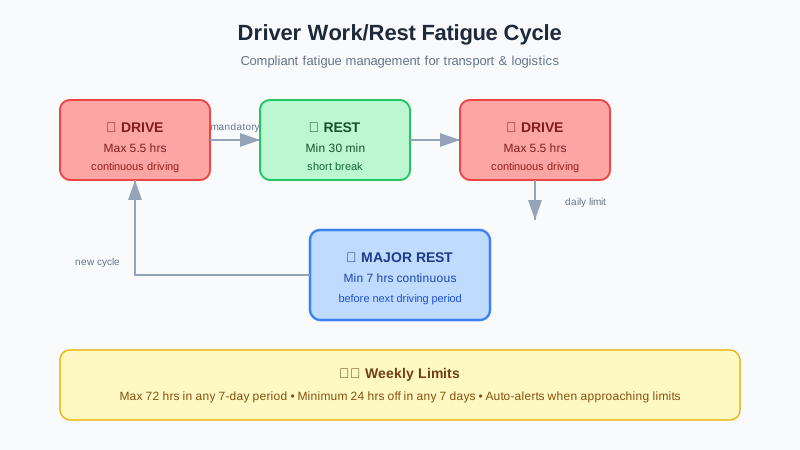
Fatigue is the single most safety-critical issue in transport. For heavy-vehicle operators, it’s also one of the most heavily regulated. The National Heavy Vehicle Regulator’s work and rest hour rules set out the limits drivers must work within and the records operators have to keep, and Safe Work Australia treats fatigue as a primary work health and safety hazard that every employer has a duty to manage.
Build fatigue limits into the roster, not after it
The most common failure is rostering first and checking fatigue later — by which point the shift is already locked in. Humanz monitors fatigue against the roster itself, tracking cumulative hours and flagging when a worker is heading toward an unsafe threshold before the shift is published. That turns fatigue management into something the planner sees up front rather than a report read after an incident — see how Humanz manages fatigue in practice.
Driver fatigue management as a continuous picture
Driver fatigue management isn’t a single check — it’s a running tally of hours worked, breaks taken and rest obtained across days and weeks. A workforce platform that holds rostered and actual hours in one place gives operations and safety teams that continuous view, and the records to prove it. Our deeper dive into building a fatigue risk management approach covers what that continuous picture should include.
Compliance gates that stop unsafe rostering
Beyond fatigue, Humanz can apply compliance gates that prevent a worker being scheduled when a required licence, medical or induction has lapsed — so a non-compliant driver simply can’t be rostered onto a run. Combined with expiry alerts, this keeps the depot ahead of renewals instead of scrambling after them.
Managing a mobile workforce on the road
The defining feature of a transport workforce is that most of it isn’t on site. Drivers are on the road, often in areas with patchy reception, and they still need their run details, any changes, and a way to communicate back.
Everything on the phone
A mobile app is non-negotiable for transport. Drivers need to view their roster, confirm shifts, complete forms like pre-start vehicle checks, and message the depot — all from a phone. Humanz delivers roster details, in-app messaging and notifications straight to the worker’s device, so a run change reaches the driver without a phone call. See how job-linked messaging keeps dispersed teams connected when most of the workforce is on the road.
Forms from the cab
Pre-start checks, fitness-for-duty declarations, defect reports and incident records all need to be captured wherever the driver is. Custom digital forms completed on mobile, with timestamps, create the documented evidence a regulator expects — without the paper that gets lost in a glovebox.
Timesheets that match what actually happened
Transport pay can be complicated — overtime, allowances, penalty rates and travel all come into play. Re-keying timesheets from paper into payroll is slow and error-prone, and in an industry with tight margins, the errors add up.
From roster to payroll with an audit trail
Humanz pre-fills timesheets from the published roster, so the starting point is what was scheduled, and variations are captured against it. Supervisors approve, every change is logged in an audit trail, and the result is a clean record ready for export toward payroll. For a hands-on example with field and trade crews, see how digital timesheets cut the re-keying.
Why accurate records matter beyond payroll
Accurate time records aren’t only a payroll concern. Fair Work requires employers to keep time and pay records for seven years, and in a fatigue-regulated industry those same records also help demonstrate that work and rest hours were managed properly.
Asset and vehicle tracking
A logistics workforce comes with significant assets — prime movers, trailers, forklifts, handheld scanners and more. Knowing who has what, and when it’s due for service, sits naturally alongside the roster.
Allocate assets with the shift
When you can assign a vehicle or piece of equipment at the same time you schedule the worker, you avoid the separate-spreadsheet problem and keep a record of who used what. Humanz includes asset tracking so plant and equipment can be allocated per shift and monitored for service due dates — we explain the approach in keeping vehicles and equipment accounted for.
Compliance, audit trails and analytics
Transport operators face overlapping obligations — heavy-vehicle law, WHS duties and Fair Work record-keeping — and being able to produce evidence quickly is half the battle in any audit or investigation.
Audit-ready by default
Because rostering, confirmations, timesheets, forms and credential checks all live in one platform, the audit trail is a by-product of doing the work, not a separate exercise. When a regulator or principal asks for records, they’re already there.
See the patterns before they cost you
Workforce analytics turn all that operational data into something useful — overtime trends, no-show rates by site, fatigue exposure, credential expiries on the horizon. Our piece on turning operational data into early warnings covers how surfacing these patterns helps operations and safety leaders act before they cost money.
How Humanz helps logistics and transport teams
Humanz is an Australian-built workforce management platform that has been refined since 2019 with field, operational and shift-based teams — companies in construction, mechanical contracting, mining services, drilling and trades, more than 80 of them to date. A logistics and transport workforce has exactly that shape: people spread across runs, depots and yards rather than sitting at desks, with safety rules riding on every shift.
For a transport operator, the pieces fit together around the day a depot actually runs. Drivers, dock crews and warehouse teams sit on one live, multi-site roster, and shift confirmation turns “the roster was sent” into “the run is covered”. Cumulative hours are tracked against that roster so fatigue is flagged before a shift is published, while compliance gates and expiry alerts on licences, medicals and inductions stop a non-compliant driver being scheduled onto a run in the first place. Once shifts are worked, roster-prefilled timesheets carry an audit trail through supervisor approval and on toward payroll, and the pre-starts, defect reports and inductions captured through custom forms and the document portal build the evidence a regulator expects. Vehicles, trailers and equipment can be allocated per shift and watched for service, in-app messaging keeps drivers in the loop without a phone call, and workforce analytics surface overtime, no-shows, fatigue exposure and looming credential expiries — all from a mobile app that puts the full platform in the driver’s cab or the warehouse worker’s hand.
One honest caveat: Humanz does not yet do automatic scheduling. AI-assisted rostering — the kind that would build a fatigue-compliant driver roster for you — is on the roadmap, but today the planning is done by your team, with the platform providing live visibility, confirmation and the compliance gates that keep unsafe rosters from going out. It is built for dispersed, shift-based operations like freight; it is a weaker fit for a purely desk-bound back office. If your day revolves around drivers, depots and warehouses, that is the workforce it was made for. There is more on the thinking behind it on our approach page.
Running heavy-vehicle fatigue limits, licence checks and multi-depot rosters off spreadsheets? Grab a Humanz walkthrough — bring a week of your real runs and we’ll roster them against your fatigue rules live. Set up a Humanz walkthrough.
Frequently asked questions
What is logistics workforce management software?
Logistics workforce management software is a platform that helps transport and logistics operators roster, schedule and manage their people — drivers, depot crews and warehouse teams — alongside the compliance, timesheet and asset obligations that come with the industry. Unlike generic rostering tools, it’s built for a mobile, multi-site workforce and the safety rules specific to freight, such as heavy-vehicle fatigue management.
Can transport rostering software handle multiple depots and warehouses?
Yes. A purpose-built platform like Humanz provides real-time, multi-site rostering so you can schedule drivers, depot crews and warehouse shifts across every location on a single live view. That makes it easy to spot coverage gaps and move people between sites without juggling separate spreadsheets.
How does the software help with driver fatigue management?
Humanz monitors fatigue against the roster itself — tracking cumulative hours and flagging when a worker is approaching an unsafe threshold before a shift is published. It does not replace your obligations under the National Heavy Vehicle Regulator’s framework, but it builds fatigue limits into the planning step and keeps the records that demonstrate work and rest hours were managed.
Does Humanz have AI for automatic scheduling?
Not yet. Automatic scheduling — including AI that would build a fatigue-compliant driver roster for you — is on the roadmap but not in the product today. For now, your planners build the runs manually, with Humanz supplying real-time visibility across depots, shift confirmation and compliance gates to keep unsafe or non-compliant rosters from going out.
How do timesheets work for drivers and warehouse staff?
Timesheets are pre-filled from the published roster, so the starting point reflects what was scheduled. Workers and supervisors capture and approve any variations, every change is logged in an audit trail, and the approved records are ready for export toward payroll — reducing the re-keying errors common with paper timesheets.
Is Humanz suitable for a small transport business?
Yes. Humanz is used by businesses of varying sizes across field-based industries. For a small-to-medium operator, implementation is typically quick, and the value is often immediate — a single live roster, confirmed shifts and digital timesheets replace several disconnected tools straight away.
What compliance obligations does the software help with?
Humanz supports Fair Work record-keeping through digital timesheets with audit trails, WHS fatigue management through roster-integrated monitoring, and credential compliance through licence, induction and medical expiry alerts and compliance gates. Because everything sits in one platform, producing records for an audit or investigation is straightforward.
Related articles
Ready to see Humanz on your own roster?
Free 30-minute walkthrough — we'll use your real crews, sites and shift patterns.